- Shikoku 88 Day 15
- 40.98km 648m of elevation gain
- Overall progress: 818.32 km of a total 1200 km ish, 43 of 88 temples
Waking up this morning to a shorter riding day was a great feeling, even if Kei had been right and there was rain about. For breakfast we’d had the option of ordering locally made frozen onigiri rice balls to reheat, made from organic ingredients like miso and pickled plum, and they went well with a pot of green tea. In the common area downstairs I got talking to the Taiwanese man from yesterday. He was well travelled and loved Scotland to my surprise. He asked what I thought were the differences between Scottish and New Zealand culture, and I was interested to hear from him what life in Taiwan was like these days. Like Lin from Taiwan earlier he said he’d heard the New Zealand economy wasn’t doing well. I felt relieved I wasn’t working in a marketing role anymore!
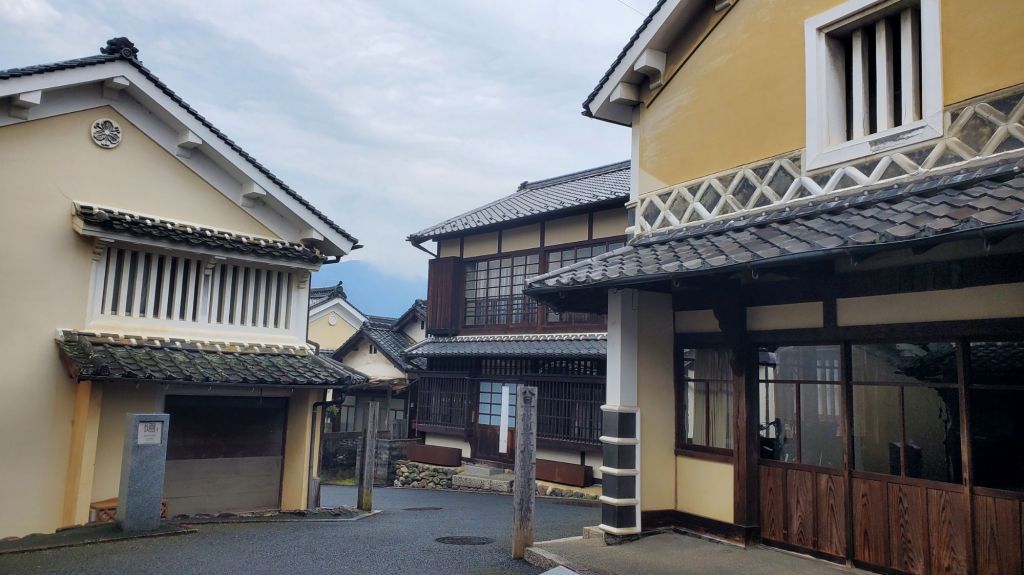
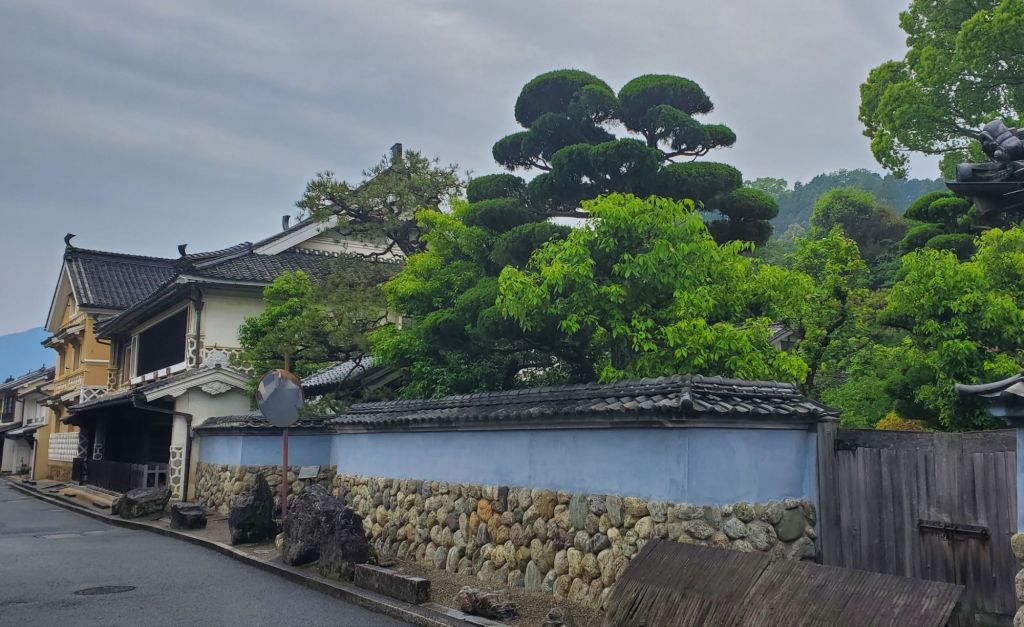
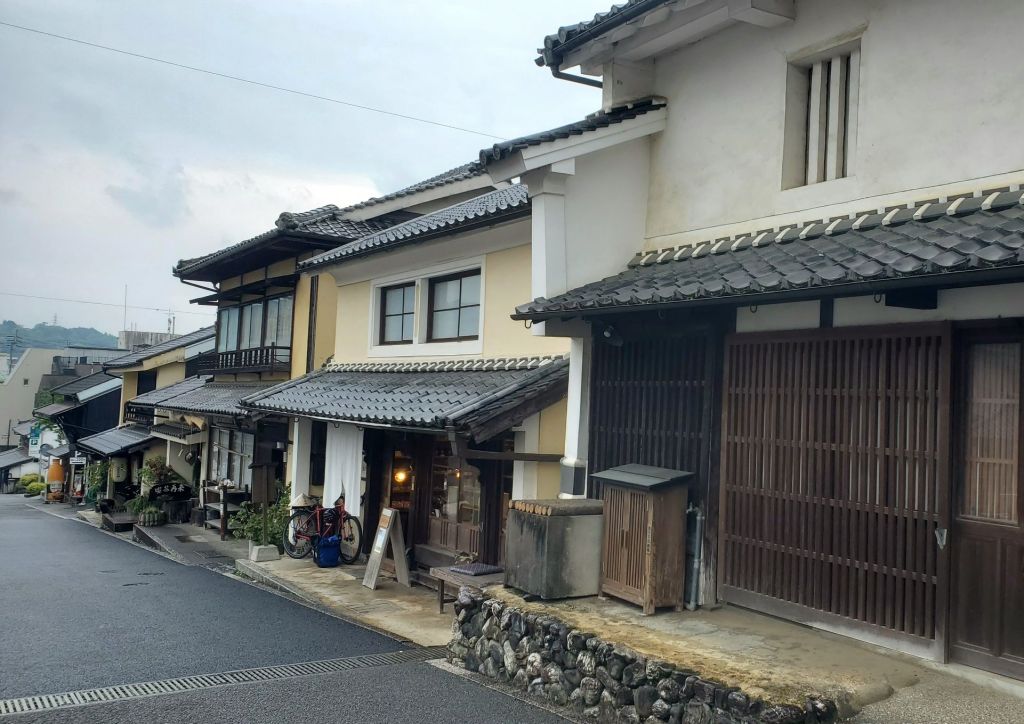
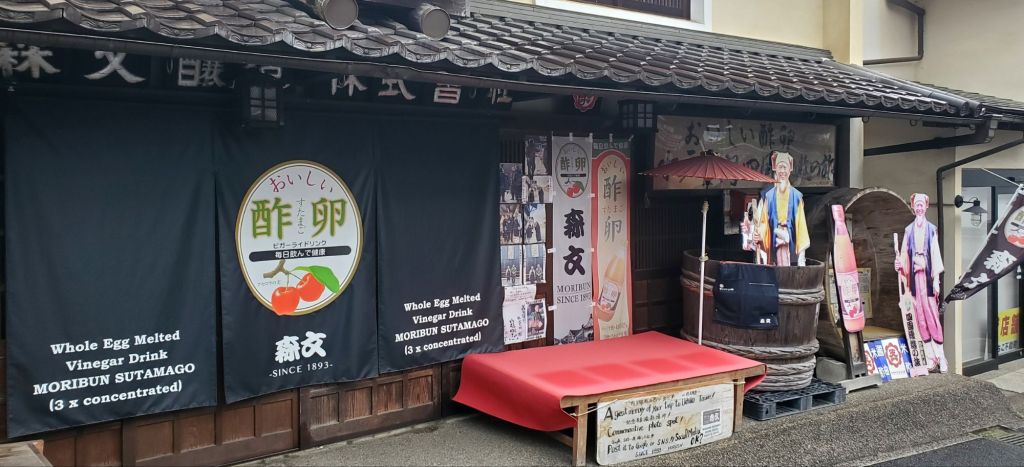
My accommodation in Uchiko was right on one of the historic streets that the town has preserved, and I wandered up and down for an hour after packing up. The town was famous for producing vegetable wax from the Edo period to the Meiji period. Nowadays there are shops selling traditional handcrafts, some preserved houses you can go inside, and a few cafes – including one with the ‘Australian’ dessert pavlova on the menu outside! Uchiko also seemed to be the home of a famous ‘whole egg vinegar drink’ which very sadly I was unable to try. The buildings were constructed using local soil mixed with white plaster that gives them a unique soft yellow colour. A tourism pamphlet invited visitors to observe them at different times of day as the yellow colour subtlety changes in different light. While that sounded like a nice way to spend a day, with spits of rain it was time to be on my way to the highlands of Kumakogen.
Uchiko’s Family Mart conbini was pleasingly well stocked with onigiri and it felt like an omuraisu (omelette with tomato sauce flavoured rice) and sekihan (savoury red beans, black sesame seeds and salt) type of day. Unfortunately my favourite ‘BeKind’ brand of energy bar wasn’t there but there were some other good choices. Learning from past mistakes, I bought two onigiri instead of four, and decided to put my rain pants on.
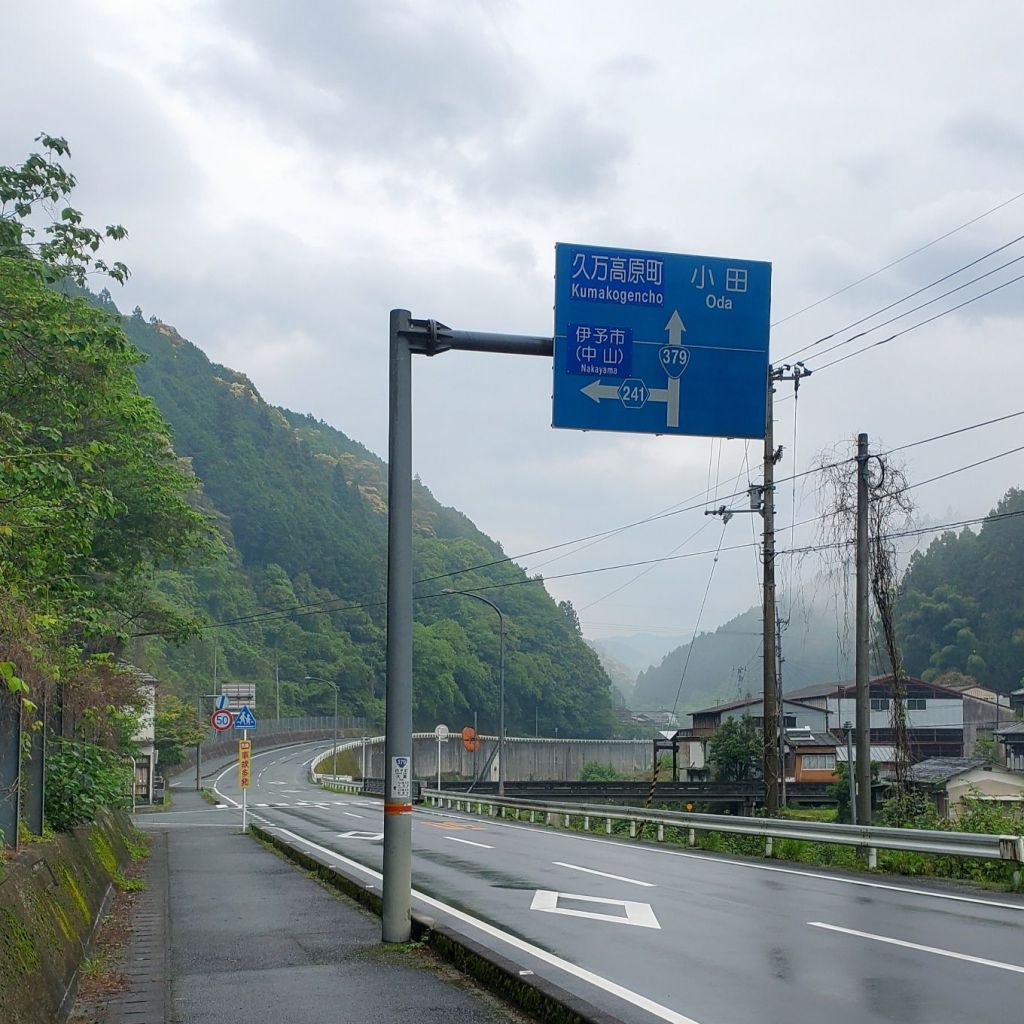
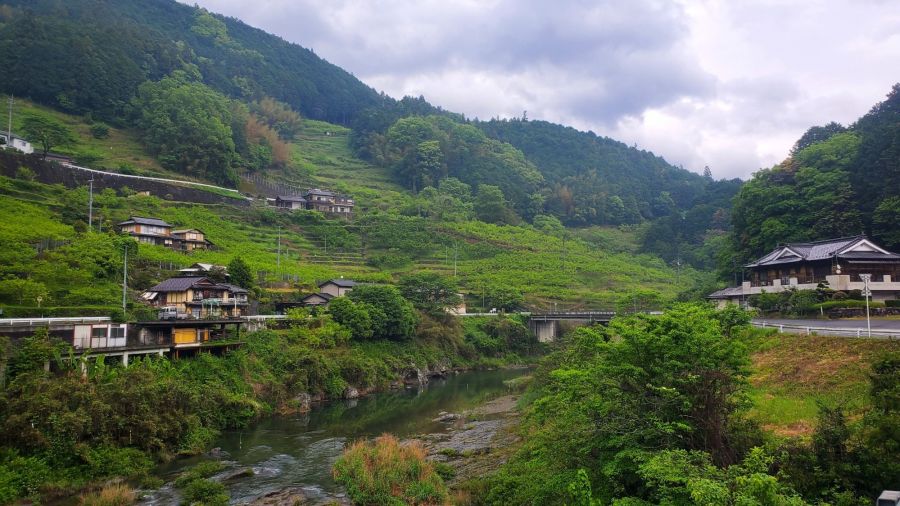
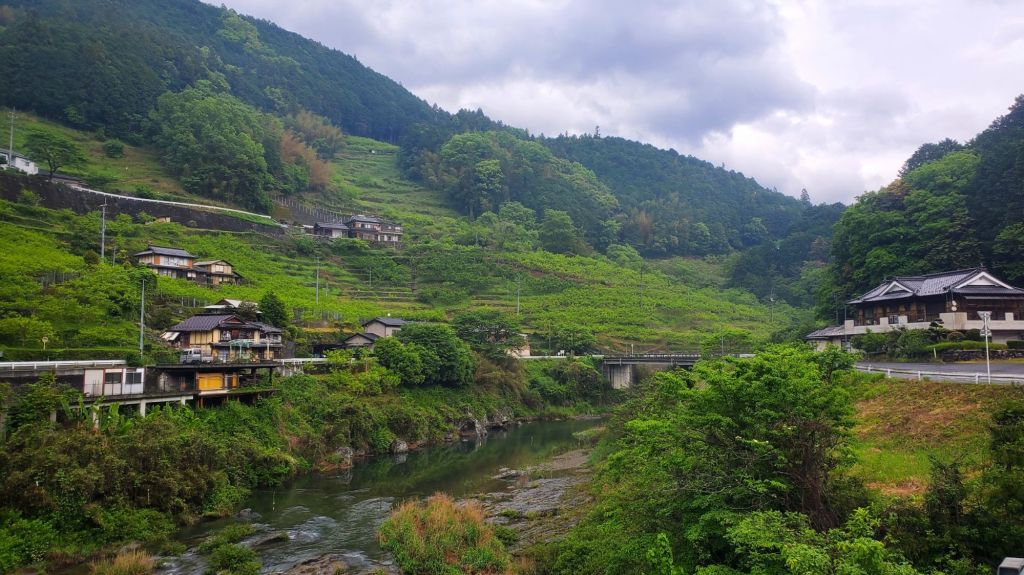
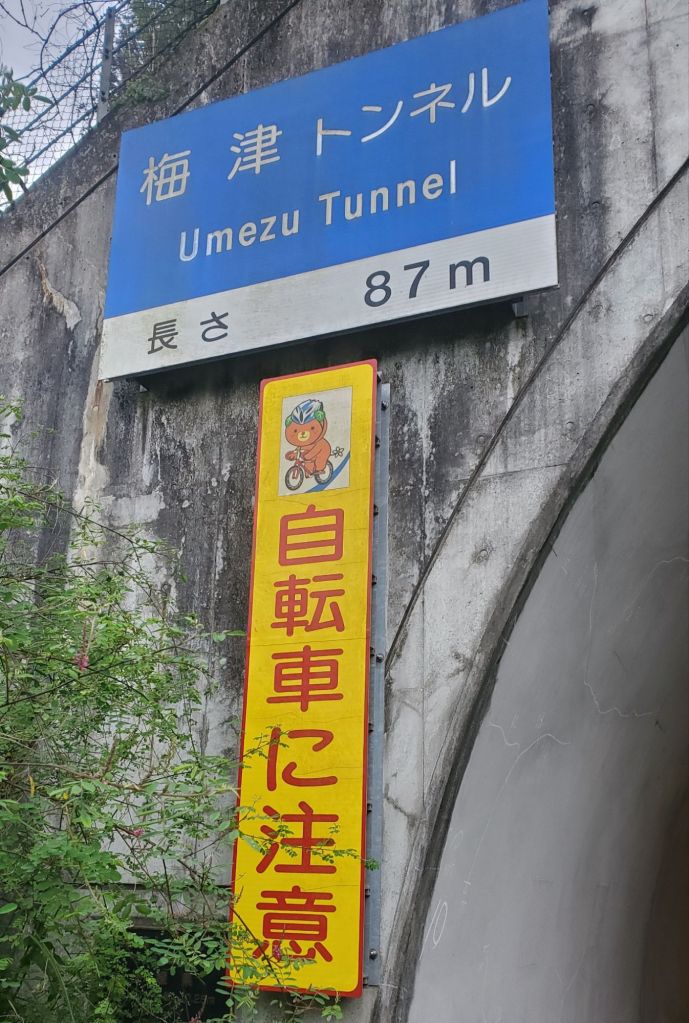
It didn’t take long for the roads to quieten, and soon there was almost no traffic. I’d made this day shorter because of all the climbing, but so far the road was a very gentle uphill or flat. It was very pleasant despite the drizzle as moody mist hung about the mountains. There were cheerful signs at the tunnel entrances with Ehime’s mascot character Mikyan reminding drivers to watch for cyclists, and nice henro huts to stop in for snacks. I had plenty of time and headspace to gaze at the yellow flowering trees, rivers that the route often followed, and the pockets of houses and tiny towns.
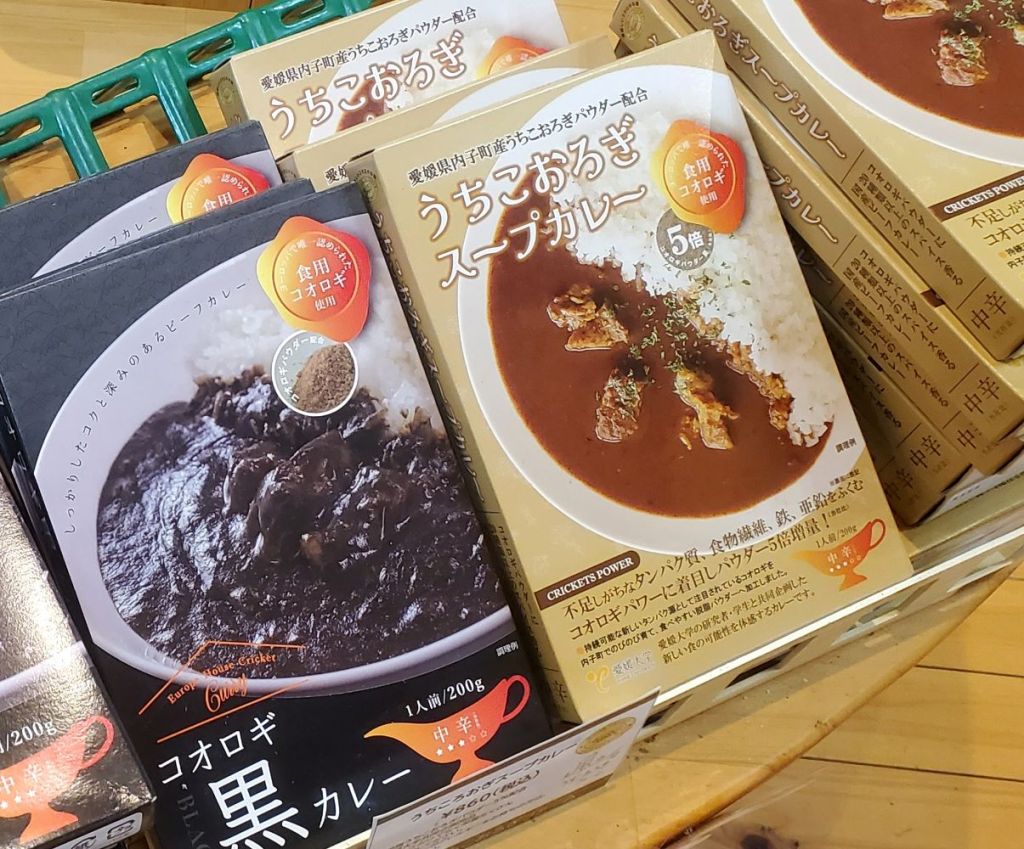
The michi no eki roadside station I stopped at was humming with the holidays, although the roads were so quiet I couldn’t quite figure out where all the people had come from. I admired the kokedama plants for sale, was surprised to see ‘crickets power’ soup curry mix, got a stamp for my scrapbook, and bought a small soft yuzu sponge cake. I realised I was at the bottom of today’s main big climb of 400 metres uphill over 8 kilometres, making it a good break location.
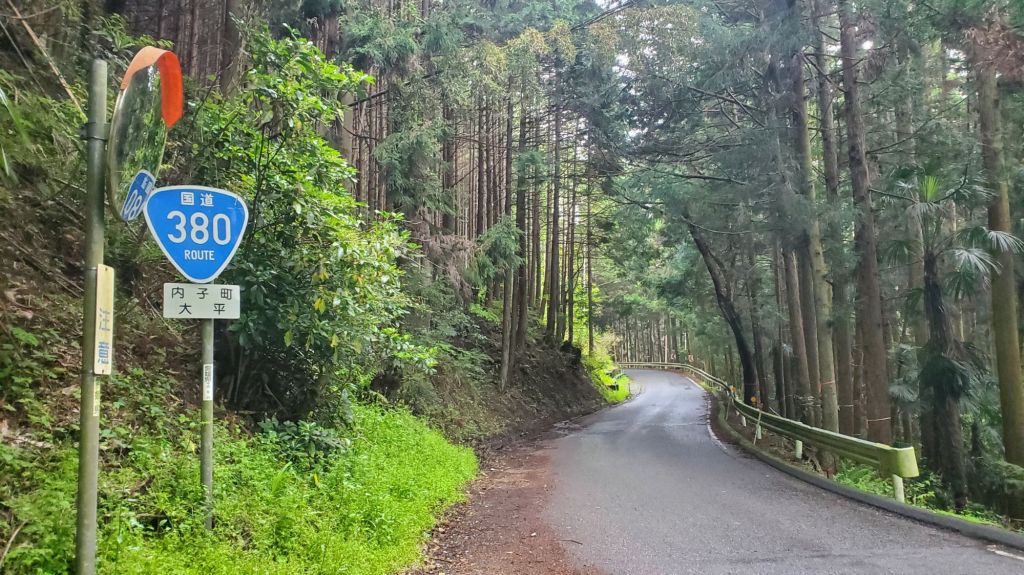
It wasn’t too steep and while the road narrowed and widened irrationally as they often seem to, it was a comfortable climb. Until I got sore from the seat, as always seems to happen at some point in the afternoon. There was no wildlife today, but still a few houses here and there and occasional cars. As the road narrowed towards the top enclosed by trees, I pulled over and stopped to take a photo. Just as I was putting my phone away, a huge Western-sized campervan came around the corner! Somehow I had a knack for being pulled over when traffic that would leave me little space came by – I had the feeling Kobo Daishi was looking out for me.
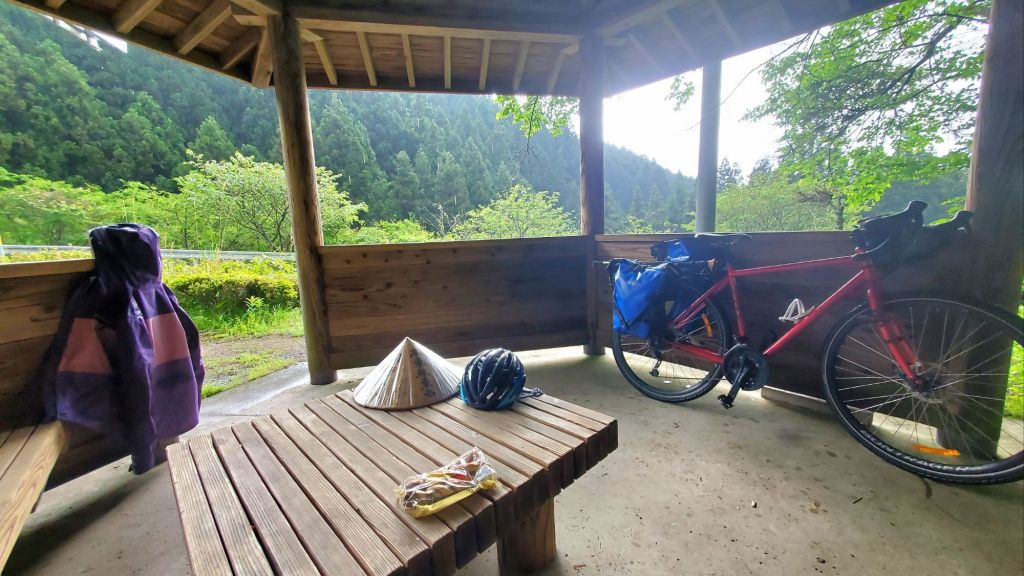
There was a long tunnel at the top of Mayumi Pass and the henro hut just before it was a good place to put another layer on and have a break. The rain had got progressively heavier and really set in, and I pulled out my down jacket to keep warm while eating.
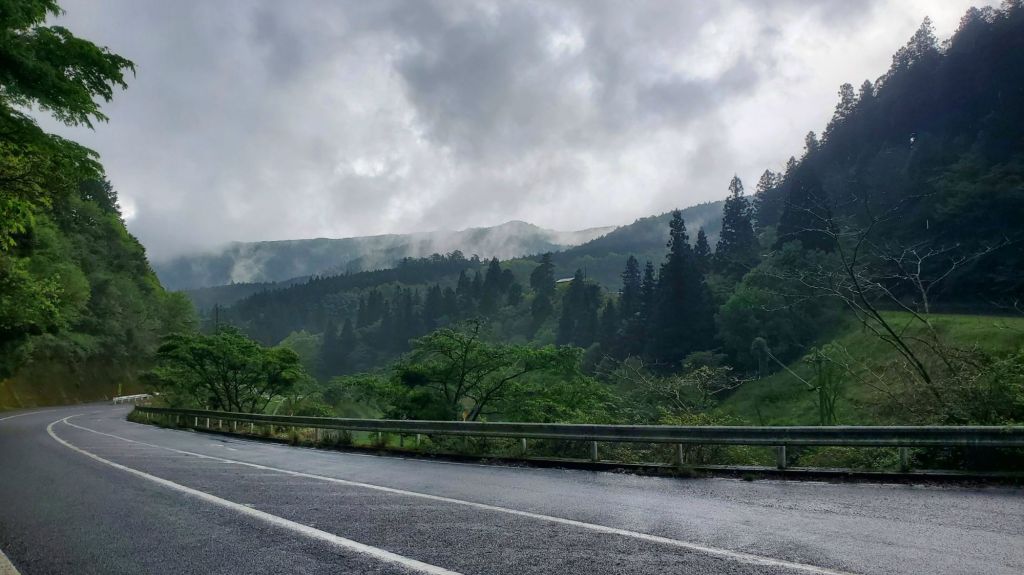
Thankfully there were no campervans in the tunnel, and while the descent was nicer than uphill I was very careful in the rain. It was cold and quite wet but I seemed on track to hit my accommodation just after 3pm check in time.
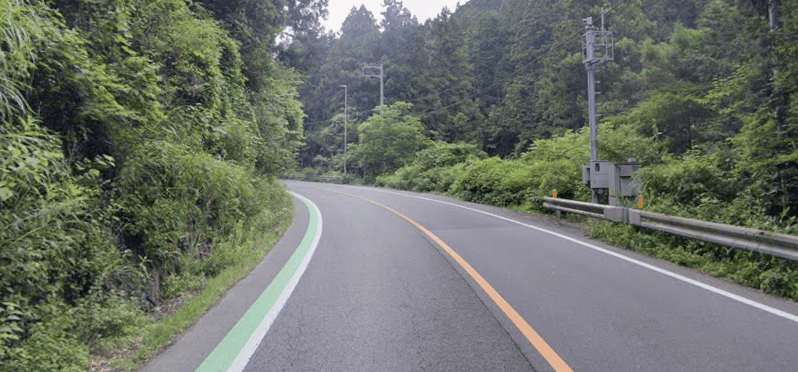
The last 5 km into Kumakogen town was survival cycling, clinging to the painted green henro line on the now much busier road with little verge, as water sprayed everywhere. Here’s what it looks like in nice weather, courtesy of Google street view:
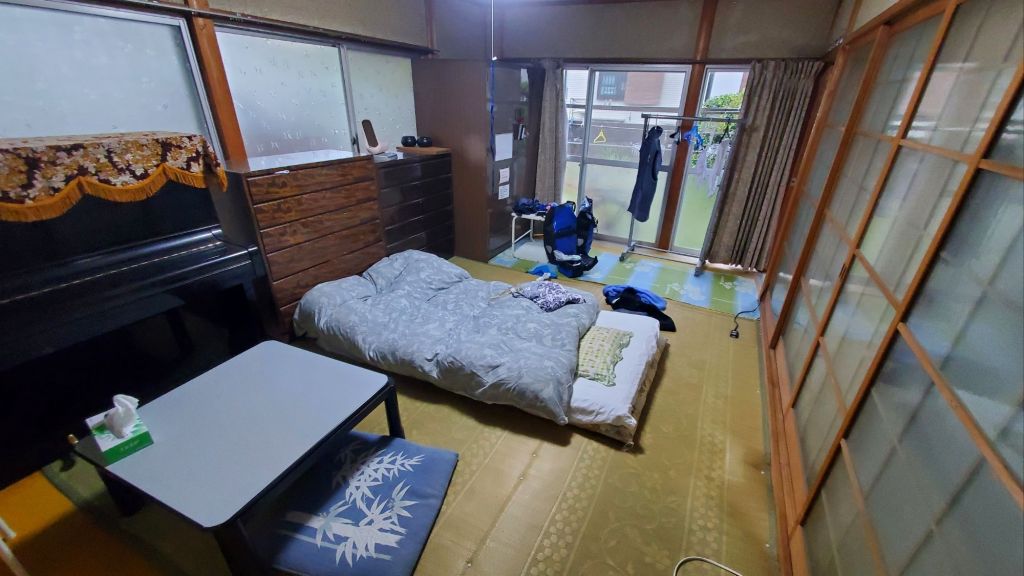
I was relieved to find my accommodation without too much confusion, then sussed out the newspaper for my shoes and towels to dry myself and my bags off like a rain riding pro. The house was old and a bit rickety, with doorways my head only just scraped under. My host was quite unique and different to the other older Japanese women I’d met so far – cheerful but straight-talking, kind but with a tough cookie aura and quite independent. I was unsure for a few minutes knowing I was here for two nights, but ultimately it turned out to be one of my favourite experiences. She immediately ran the bath for me to warm up, then popped next door to loudly tell her son(?) about the gaijin who’d just arrived on her bike but had really good Japanese, making me laugh but also hurry into the bath before I accidentally heard anything more!
I’d arrived at the same time as Shinobu-san – a Japanese woman a bit older than me who was using the Golden Week holidays to section walk the pilgrimage with her friend. Then I sat down at the low table in the tatami room lounge with the other guest tonight – a Japanese grandpa who was quite hard of hearing. I managed to strike up a conversation though, and soon he was showing me photos and videos of summer festivals in his hometown Tokyo. Our host had enthusiastically said not to worry about dinner, she would feed us as ‘osettai’ (the kind help that Shikoku locals give to pilgrims) which seemed very generous. I imagined something simple but hearty and was grateful I didn’t have to venture out to the conbini.
At 6pm on the dot, the four of us assembled to find individual nabe hot pots on small gas cookers, with thin slices of pork, cabbage, clear noodles, spring onions and mushrooms to cook, then dip in ponzu before eating. Alongside were side dishes of local mountain herbs, slices of duck, bamboo, pickles, egg tofu which I hadn’t had since high school, and delicious rice. For dessert there was homemade sweet potato cake, and citrus fruit. What an amazing spread! I couldn’t believe the host was providing us all this. Her generosity was amazing. Looking back though – it wasn’t just the delicious food. The small size of our group and the way we were all seated on the tatami around the low table gave us the chance to get to know each other. We must have talked for a couple of hours while cooking and eating our dinner, then dessert, and finally enjoying some green tea together as our host joined us.
I learnt that Shinobu-san was an Italian language tour guide in Nagasaki, having lived in Italy for 13 years in the past. We had plenty to discuss about language learning and travelling. She’s 6 years into her section walking of the pilgrimage, while Japanese grandpa is on his second lap around. He explained how he gets tips from other walkers on the best places to eat, where they might give you a little something extra for being a pilgrim, and told us some of his favourite temples were actually the ‘bekkaku’ (20 other temples associated with the 88-temple route and Kūkai but not officially included). Part of his reasoning was that they’re actually excited to get visitors and welcome them warmly, and at this point our host explained how she had done the pilgrimage a few times but never once got the stamps. She’d realised that meeting a grumpy person in the stamp office of a temple you’d walked all day to get to, could ruin the rest of your day. She told of how back in the day, 5 bus loads of pilgrims would pull up all at once and if you happened to queue for a stamp while they were in the midst of that, you were viewed as a pain. Nowadays it’s different and they happily pause to do stamps for individuals. I learnt that apparently some of the people in the offices are just working a part time job, and are often calligraphy teachers. Someone had left a stamp book from 25 years ago with our host, and we then got it out to compare the stamps of the past with today’s. It was fascinating to hear them discussing which characters and calligraphy was more well done, and this whole conversation was a revelation really. I’d occasionally struck bored looking people in the offices, and had wondered why some looked to be dressed as monks or temple staff and others didn’t, and why there was such an age range.
The final part of our evening together involved a detailed briefing from our host on tomorrow’s route. We pored over her map, and Shinobu-san and her friend had lots of questions while Japanese grandpa was very relaxed. The early tunnel was dangerous, her son refused to walk through it, and the locals sped through – there was no footpath inside it. On the upside, apparently the forest trails between temple 44 and 45 were some of the most beautiful on the whole journey, and my host was very keen for me to walk them. I did consider it but decided to stick to my initial plan of a short day on the bike, perhaps stopping at the onsen on the way back or spending the afternoon in a café writing my blog. The last thing we talked about was the location of toilets, with this being of particular concern to the two Japanese women. This was the point where my image of our host as a hilarious hard-case was cemented, as she laughed away while demonstrating her squatting in the forest technique. I added gentle encouragement, explaining that we often had to do this hiking in New Zealand, and about leave no trace etc.
I had absolutely loved this evening, immersed in Japanese conversation with four lovely people from different walks of life. The pilgrimage had bought us together, and we’d bonded over delicious food and shared experiences. It was the first time on the trip I really got to hear in detail from fellow Japanese pilgrims about their travels.
 Adventures of Nic
Rapt your experience is going so well. So authentic.
LikeLiked by 1 person